A commercial truck is more than a vehicle. It is a working asset that moves freight, supports construction projects, delivers products, and keeps businesses operating.
When that truck develops a problem, every minute can matter.
A warning light, starting problem, loss of power, overheating issue, or unusual engine behavior can quickly become a major interruption. Traditionally, the solution was to arrange a tow and transport the truck to a repair facility.
That process can take valuable time.
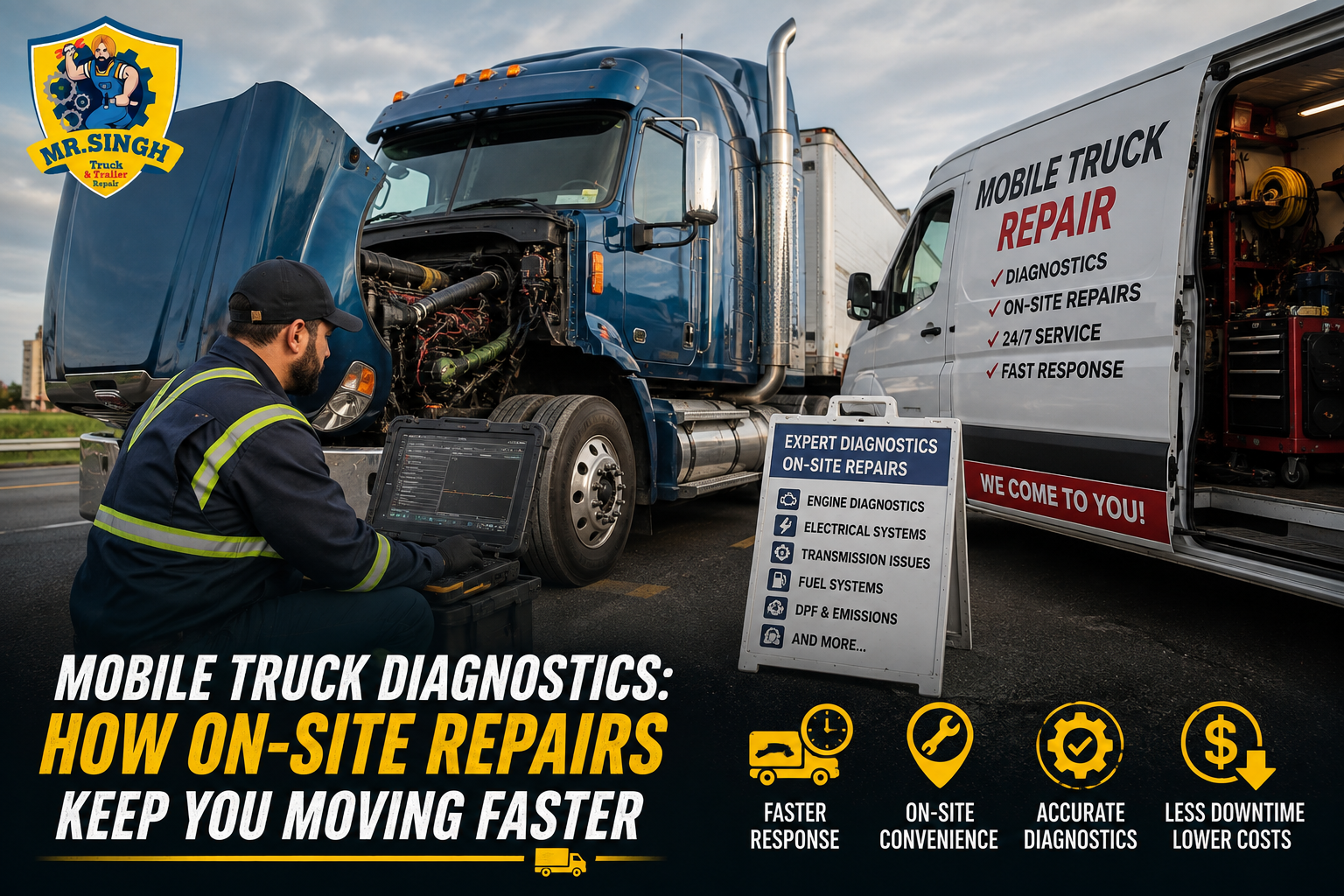
Mobile truck diagnostics changes the approach. Instead of immediately moving the truck to a shop, a qualified mobile technician can travel to its location, connect professional diagnostic equipment, identify the problem, and determine the appropriate repair strategy.
This approach is particularly useful for commercial drivers, owner-operators, contractors, and fleet managers who need dependable on-site truck repair.
What Is Mobile Truck Diagnostics?
Mobile truck diagnostics is the process of using professional diagnostic equipment at the truck’s current location to identify faults and determine what repairs may be required.
Modern trucks contain sophisticated electronic control systems. These systems monitor engine performance, emissions, transmission operation, electrical systems, and other vehicle functions.
When a fault occurs, the truck may store diagnostic trouble codes, commonly called DTCs.
A mobile technician can use compatible diagnostic equipment to access these codes and examine relevant system information.
What Can Mobile Diagnostics Identify?
Depending on the truck and its systems, diagnostic testing may help identify:
- Engine faults
- Electrical problems
- Starting and charging issues
- Transmission faults
- Sensor failures
- Fuel-system problems
- Aftertreatment and emissions faults
- DPF-related issues
- DEF and SCR system problems
- Cooling-system concerns
- Communication faults between electronic control modules
- Warning-light conditions
- Intermittent performance problems
However, a diagnostic code does not always mean that the identified component is automatically defective.
A professional technician must interpret the code alongside symptoms, system data, inspection results, and testing.
That distinction is important because replacing the wrong part can increase repair costs without fixing the underlying problem.
How On-Site Truck Repair Works
The biggest advantage of on-site truck repair is convenience. The repair process starts where the truck is located.
Step 1: Describe the Problem
The technician first gathers information about the truck’s symptoms.
Useful information may include:
- Warning lights
- Engine noises
- Starting difficulties
- Loss of power
- Smoke
- Overheating
- Transmission behavior
- Recent repairs
- Changes in fuel economy
- When the problem started
This information helps narrow down possible causes.
Step 2: Perform Mobile Truck Diagnostics
The technician connects suitable diagnostic equipment to the truck.
The diagnostic process may include reading fault codes, checking live data, examining system parameters, and identifying abnormal readings.
The technician then compares the electronic information with the truck’s physical symptoms.
Step 3: Inspect the Truck
Electronic diagnostics are only one part of the process.
A physical inspection may reveal damaged wiring, loose connections, fluid leaks, worn components, damaged hoses, poor grounds, or other issues that a diagnostic scan alone cannot identify.
Step 4: Determine the Repair
After diagnostics and inspection, the technician can explain the likely problem and recommend the appropriate repair.
If the repair can be safely completed at the location, the technician can perform the necessary work as part of the mobile truck repair service.
Step 5: Test the Vehicle
After completing a repair, the truck should be tested to confirm that the problem has been addressed.
Depending on the fault, this can involve clearing relevant codes, checking system operation, starting the engine, monitoring readings, or conducting additional testing.
Why Mobile Truck Repair Can Save Time
Time is one of the most important benefits of mobile service.
A truck that cannot operate may create several secondary problems. A delivery can be delayed. A construction project can lose productive hours. A driver may need to wait for towing and transportation.
With on-site truck repair, the technician comes to the truck rather than requiring the truck to travel to the technician.
Reduced Towing Dependence
Not every truck problem requires a tow.
If the vehicle can be safely inspected and repaired at its current location, mobile service may eliminate the need to arrange transportation to a repair facility.
This can simplify the recovery process.
Faster Problem Identification
A diagnostic-equipped mobile technician can begin troubleshooting when they arrive.
Instead of spending additional time arranging transportation before diagnosis begins, the problem can be investigated at the truck’s current location.
Less Operational Disruption
For fleet operators, getting one truck back into service can help reduce scheduling problems.
A faster repair can mean fewer changes to routes, deliveries, drivers, and equipment schedules.
Expert insight: Commercial vehicle downtime can create costs beyond the repair itself, including lost operating time, delayed deliveries, driver waiting time, and potential scheduling disruptions.
Mobile Diesel Diagnostics for Modern Trucks
Diesel engines remain essential to transportation, construction, agriculture, and other commercial industries.
Modern diesel trucks also rely heavily on electronic control systems.
Mobile diesel diagnostics combines electronic testing with mechanical troubleshooting to identify problems efficiently.
Common Diesel Diagnostic Areas
A mobile diesel diagnostics service may investigate:
Engine Performance
Issues such as rough running, poor acceleration, hard starting, excessive smoke, or reduced power can have multiple causes.
Diagnostics help narrow the possibilities.
Fuel Systems
Fuel delivery problems can affect engine performance and starting.
Testing may help identify issues involving fuel pressure, injectors, sensors, or related components.
DPF and Emissions Systems
Diesel aftertreatment systems can generate warning lights and performance concerns when faults occur.
A diagnostic process can help identify whether the problem relates to sensors, exhaust components, regeneration conditions, or other system issues.
Electrical Systems
Modern trucks depend on electrical power and communication between control modules.
Battery, alternator, wiring, grounding, sensor, and communication problems can all cause vehicle issues.
When Should You Request a Truck Diagnostics Service?
Not every warning sign should be ignored.
A truck diagnostics service may be appropriate when a truck experiences:
- Check-engine or system warning lights
- Sudden loss of engine power
- Difficult starting
- Engine misfires
- Unusual smoke
- Overheating
- Transmission problems
- Electrical failures
- Reduced performance
- Unexpected fuel consumption
- DPF or emissions warnings
- Repeated fault codes
- Intermittent problems
Early diagnosis can help identify developing problems before they become more disruptive.
However, safety comes first. If a truck has a serious brake problem, severe overheating, major fluid leak, steering issue, or another dangerous condition, the driver should stop operating the vehicle and seek professional assistance.
Mobile Truck Repair vs. Traditional Repair Shops
Both mobile repair and traditional repair facilities have their place.
A repair shop may be the better option when a truck requires extensive teardown, specialized machinery, major component replacement, or repairs that cannot reasonably be completed in the field.
Mobile service is particularly valuable when the truck needs diagnosis, troubleshooting, emergency assistance, or repairs that can be completed at its location.
The Main Difference
The key difference is where the service happens.
Traditional repair requires the truck to reach the shop.
On-site truck repair brings the technician and appropriate equipment to the truck.
For businesses where downtime is expensive, that difference can be significant.
Mobile Truck Repair Edmonton: Why Local Service Matters
Edmonton is an important transportation and commercial hub in Alberta. Trucks operate throughout the city and surrounding areas for freight transportation, construction, industrial work, delivery services, and other commercial activities.
Local conditions can also make truck problems more challenging.
Cold temperatures can affect batteries and starting systems. Heavy workloads can place additional demands on engines and cooling systems. Long operating hours can increase wear on components.
Edmonton traffic can also make transporting a disabled commercial truck more complicated.
This is where mobile truck repair Edmonton services can provide practical support.
Instead of automatically arranging a tow across the city, truck owners and fleet operators can request assistance at the vehicle’s location when an on-site repair is suitable.
On-Site Truck Repair Edmonton for Commercial Vehicles
For Edmonton businesses, keeping commercial vehicles operational is a major priority.
Mobile technicians can potentially provide service at locations such as:
- Roadsides
- Fleet yards
- Industrial areas
- Construction sites
- Parking areas
- Customer locations
- Commercial properties
Service availability depends on the location, truck condition, repair requirements, and technician capabilities.
How to Get Better Results From Mobile Diagnostics
Drivers and fleet managers can make the diagnostic process more efficient by providing accurate information.
Record Warning Messages
Write down warning lights or dashboard messages when they appear.
If safe, take a photo of the dashboard. This can provide useful information to the technician.
Explain When the Problem Happens
Tell the technician whether the issue occurs:
- During startup
- Under heavy load
- At highway speeds
- During acceleration
- When the engine is cold
- After the engine warms up
- During regeneration
Patterns can help technicians troubleshoot intermittent problems.
Provide Vehicle Information
Have the truck’s make, model, year, engine type, and relevant identification information available.
Maintenance records and recent repair information can also help.
Do Not Ignore Recurring Problems
If a warning disappears and then returns, that does not necessarily mean the problem has disappeared.
Intermittent faults can become more serious over time.
The Business Value of Faster Truck Repairs
For commercial operators, truck repair is not simply a maintenance expense.
It is part of operational continuity.
A truck that remains unavailable can affect deliveries, project timelines, customer commitments, and fleet utilization.
Mobile repair helps address this challenge by reducing unnecessary movement and allowing diagnosis to begin at the truck’s location.
Industry insight: Fleet maintenance programs commonly focus on reducing unplanned downtime because vehicle availability directly affects productivity and operating costs.
The goal is not simply to repair a truck quickly.
The goal is to identify the actual problem, complete the appropriate repair, and return the vehicle to reliable service.
Choosing a Mobile Truck Repair Provider
When selecting a mobile repair provider, consider several factors.
Diagnostic Capability
Choose a provider that understands modern truck electronic systems and has suitable diagnostic equipment.
Commercial Truck Experience
Commercial trucks differ significantly from passenger vehicles.
Look for experience with diesel engines, heavy-duty systems, electrical faults, and commercial vehicle applications.
On-Site Capability
Confirm that the provider offers actual on-site truck repair and can service the type of truck involved.
Clear Communication
A reliable technician should explain the diagnosed problem and recommended repair in understandable language.
Local Availability
For Edmonton operators, working with a provider familiar with the local area can make roadside or fleet-yard assistance easier to coordinate.
Why Preventive Diagnostics Still Matter
Diagnostics should not only be used after a breakdown.
Preventive maintenance can help identify potential issues before they cause an unexpected failure.
Regular inspections can reveal developing problems involving batteries, belts, hoses, electrical connections, cooling systems, and other components.
For fleets, maintenance records can also help identify recurring problems and improve service planning.
Frequently Asked Questions
What is mobile truck diagnostics?
Mobile truck diagnostics is the process of testing a truck’s electronic and mechanical systems at its current location. A technician uses compatible diagnostic equipment, reviews fault codes and system data, and performs physical inspections to identify the likely cause of a problem. This approach can reduce unnecessary towing and speed up troubleshooting.
Why is on-site truck repair useful?
On-site truck repair is useful because the technician travels to the vehicle instead of requiring the truck to reach a repair shop. This can reduce towing requirements, limit downtime, and allow diagnosis to begin sooner. It is especially valuable for commercial trucks that are disabled at roadsides, fleet yards, or job sites.
How does mobile diesel diagnostics work?
Mobile diesel diagnostics typically combines electronic scanning with physical inspection and system testing. The technician checks stored fault codes, reviews relevant operating data, and examines components related to the reported symptoms. This process helps determine whether the issue involves the engine, fuel system, electrical system, emissions equipment, or another component.
When should I request a truck diagnostics service?
You should request truck diagnostics when a vehicle shows warning lights, loses power, becomes difficult to start, develops unusual engine behavior, overheats, experiences electrical problems, or repeatedly shows fault codes. Early professional diagnosis can help identify the underlying problem and determine whether an on-site repair is appropriate.
Who provides mobile truck repair in Edmonton?
Mr. Singh Mobile Truck Repair provides mobile truck repair services for customers in Edmonton. The service can help truck owners, drivers, contractors, and fleet operators address diagnostic and repair needs at suitable on-site locations. For service availability and assistance, contact +1 (780) 667-7076.
Conclusion
Truck problems do not always happen at convenient times or convenient locations.
A commercial vehicle can develop an electrical fault on the roadside, lose power at a job site, or trigger a warning while operating under a heavy load.
Mobile truck diagnostics provides a practical first step. By bringing diagnostic capability directly to the vehicle, technicians can investigate problems without automatically requiring the truck to travel to a repair shop.
For Edmonton truck owners and businesses, mobile truck repair Edmonton services can help reduce unnecessary downtime and get vehicles back toward productive operation faster.
The right approach is simple: diagnose the actual problem, choose the appropriate repair, and prioritize safe vehicle operation.
If your truck needs mobile truck repair, mobile diesel diagnostics, or on-site truck repair Edmonton, contact Mr. Singh Mobile Truck Repair.
Call +1 (780) 667-7076 today to discuss your truck repair or diagnostic needs and get professional assistance at your truck’s location.